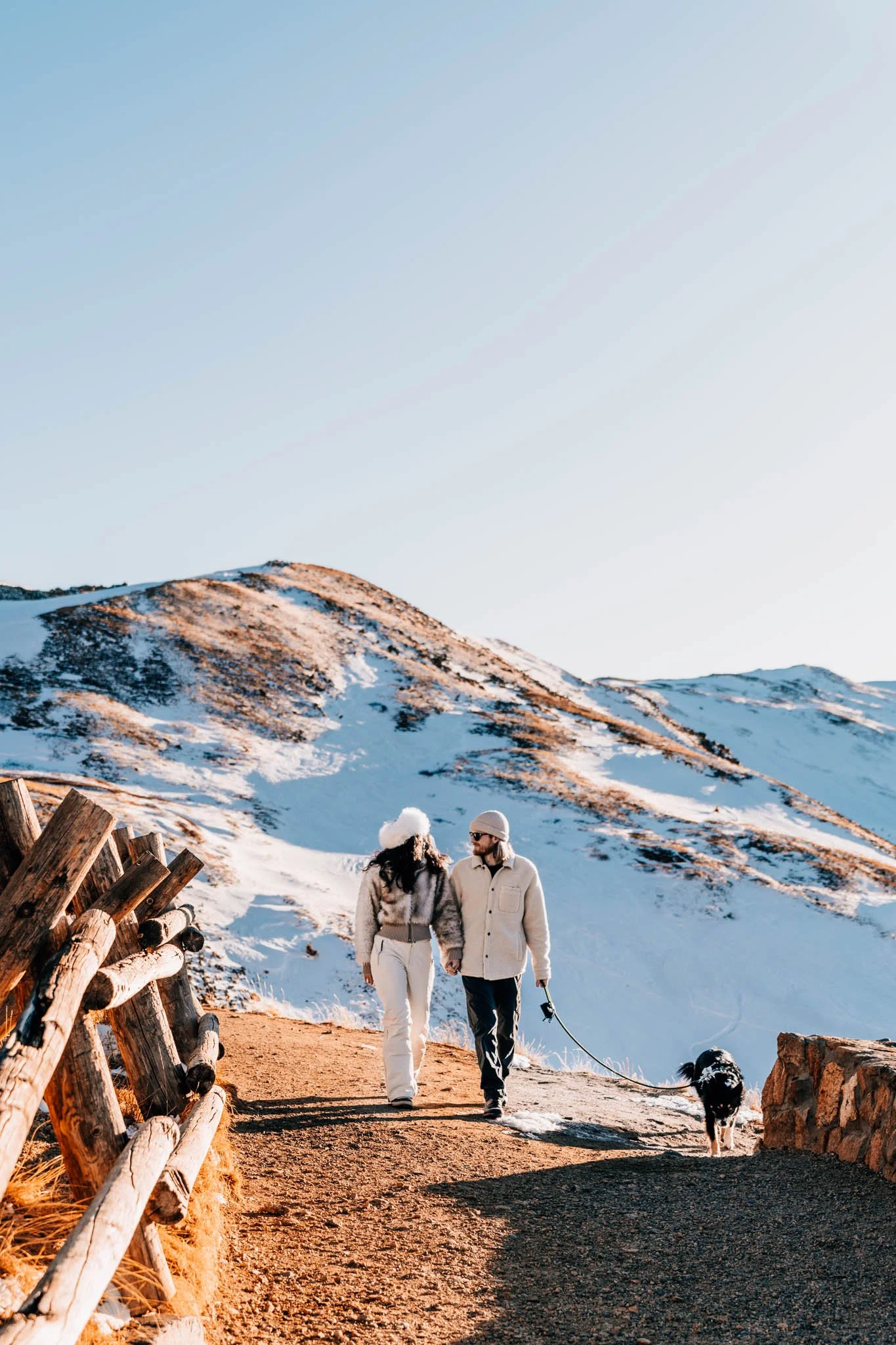
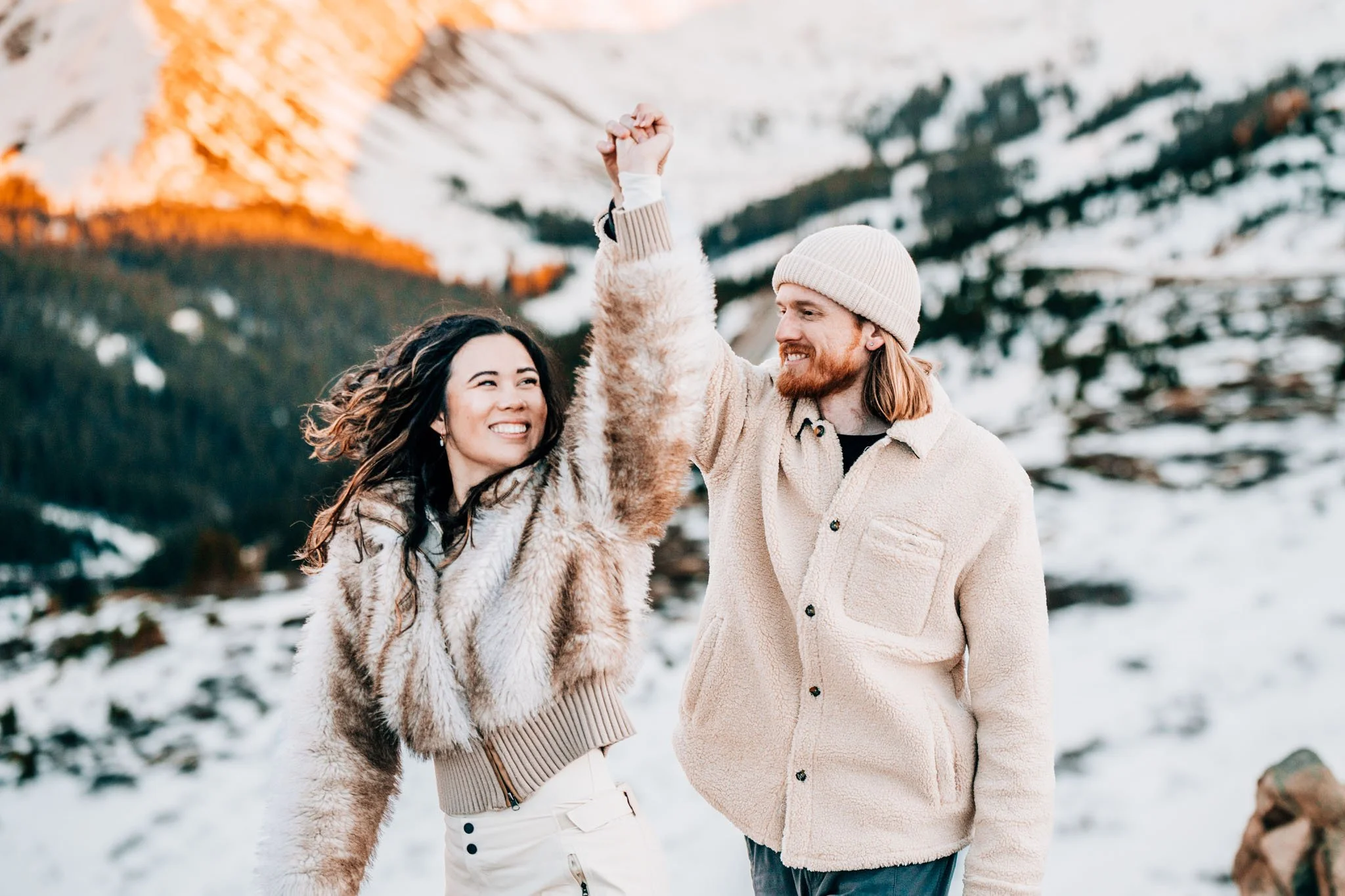
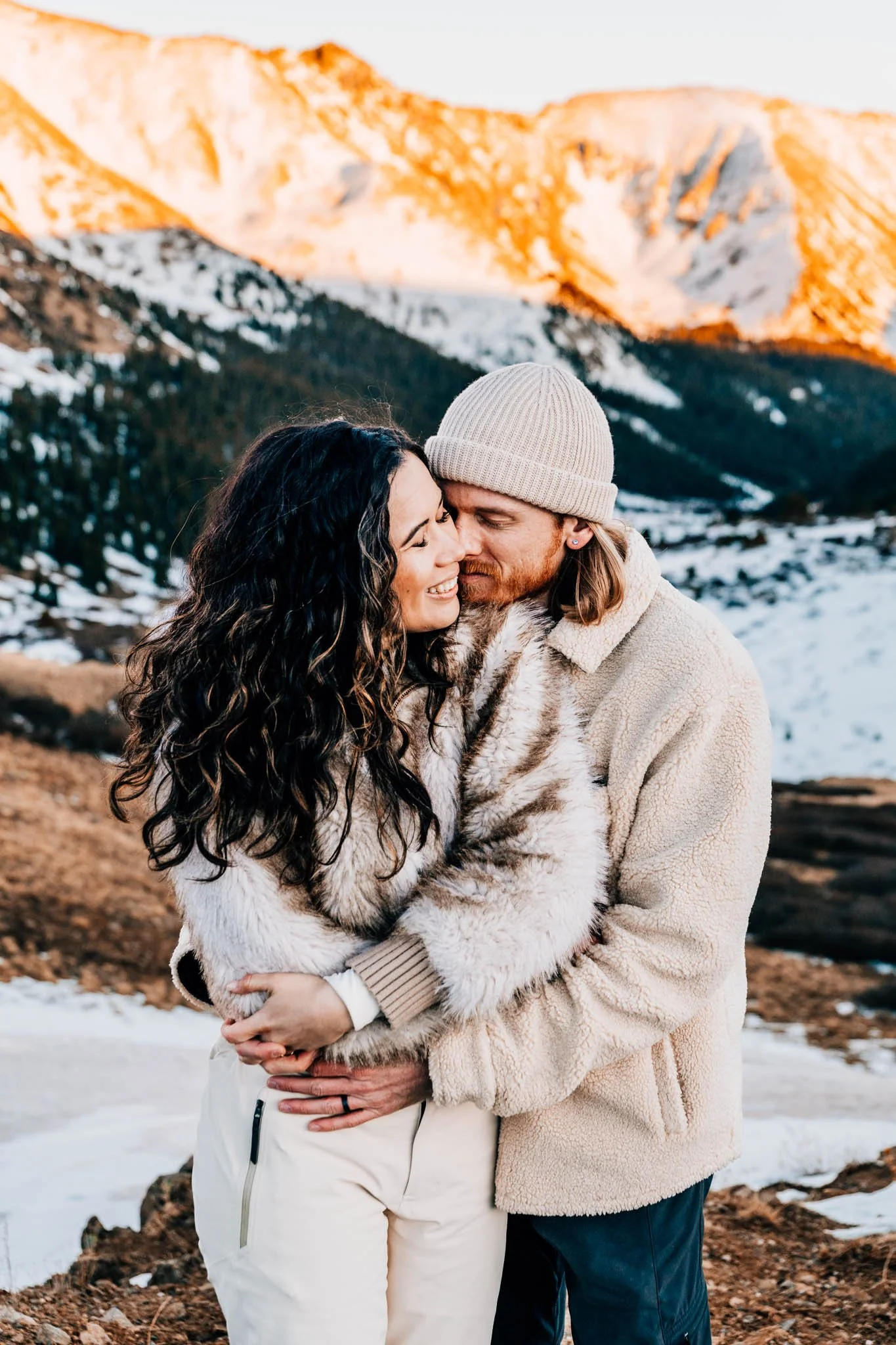
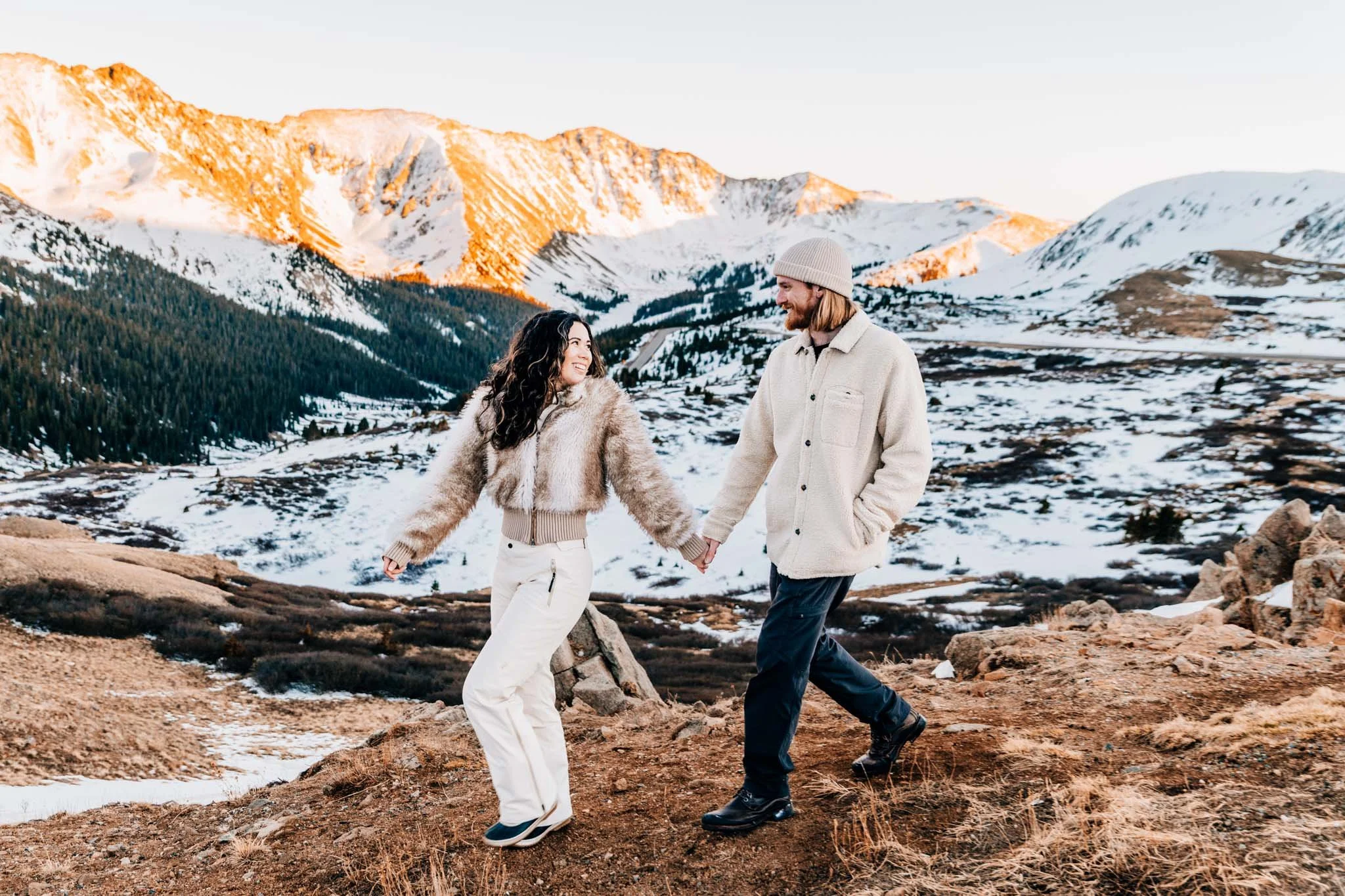
Colorado Backcountry Ski Engagement Session | Loveland Pass
Kristi and Wyatt met the way a lot of great Colorado love stories start—on a backcountry hut trip somewhere deep in the Rockies. No joke, I have actually talked to quite a few couples who met in a similar way. Apparently backcountry hut trips are great for dating singles!
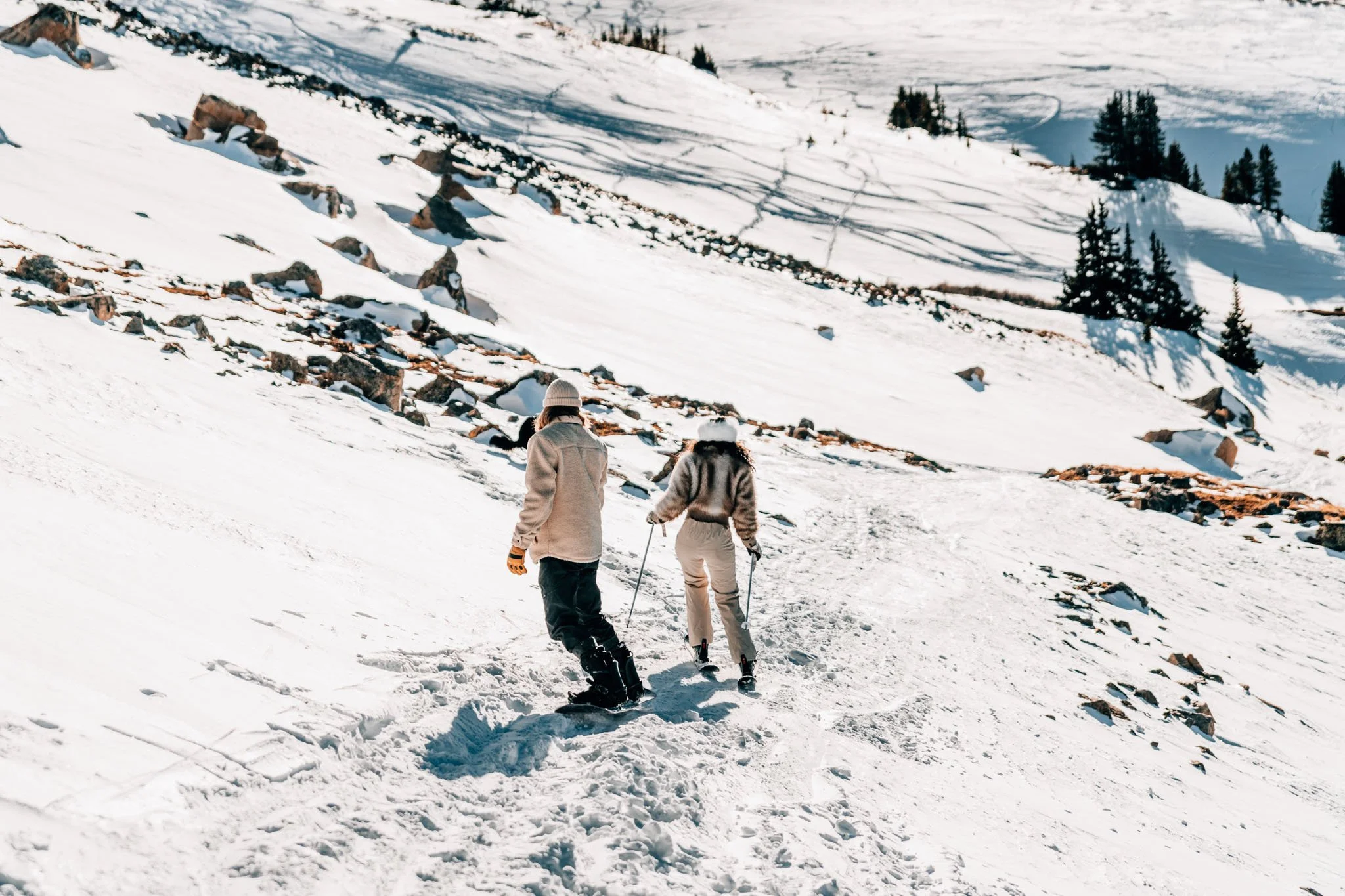
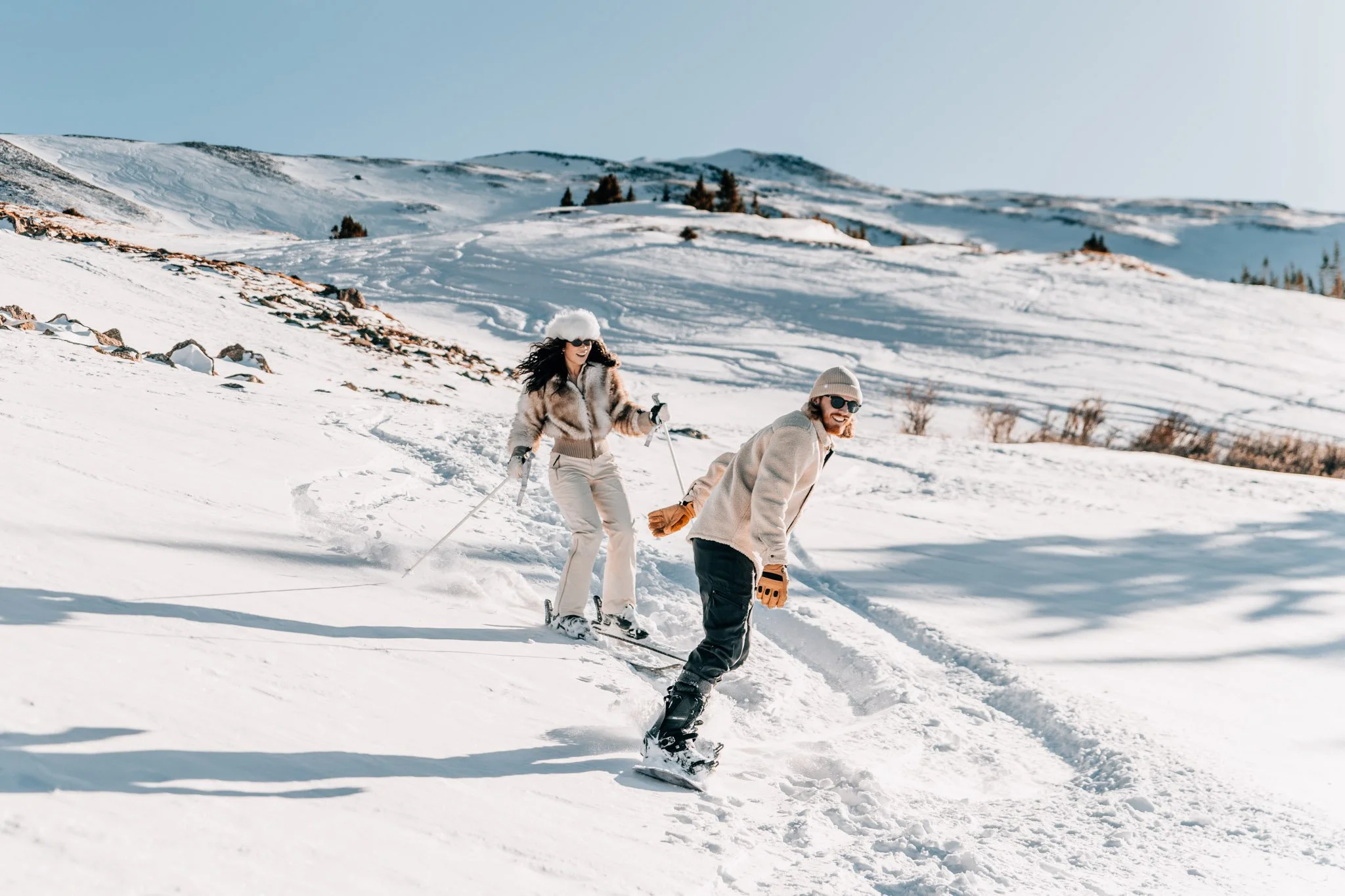
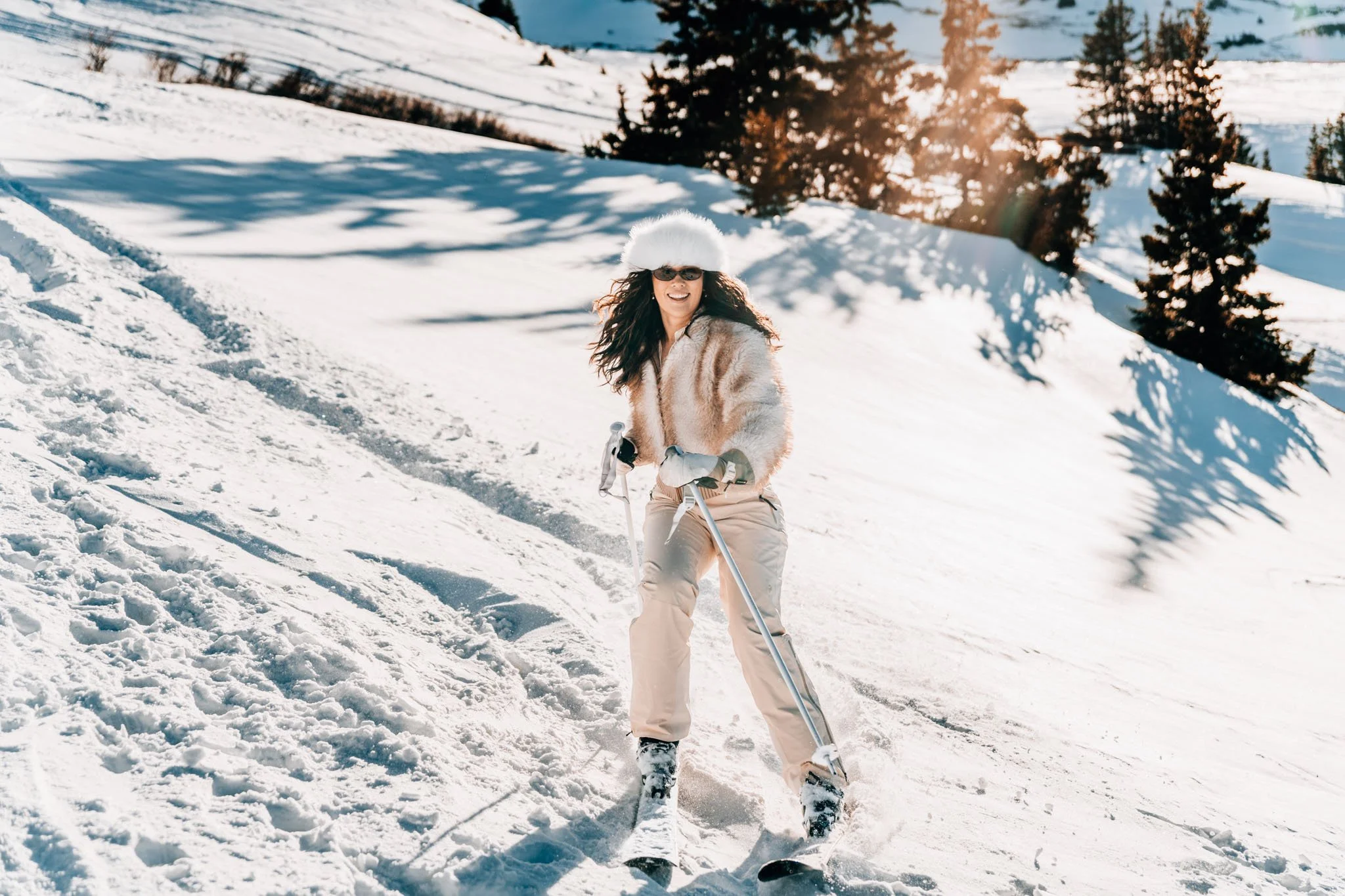
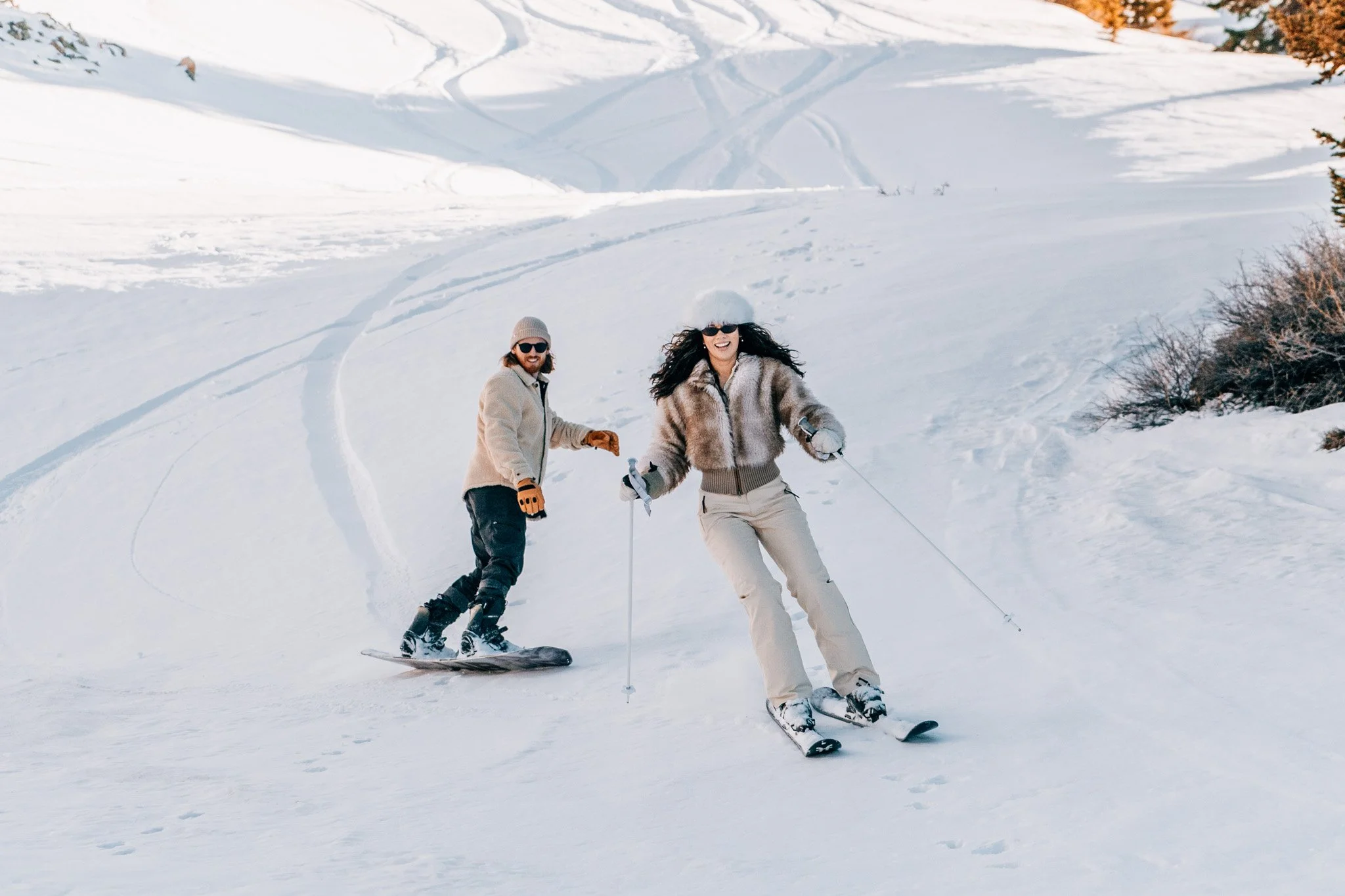
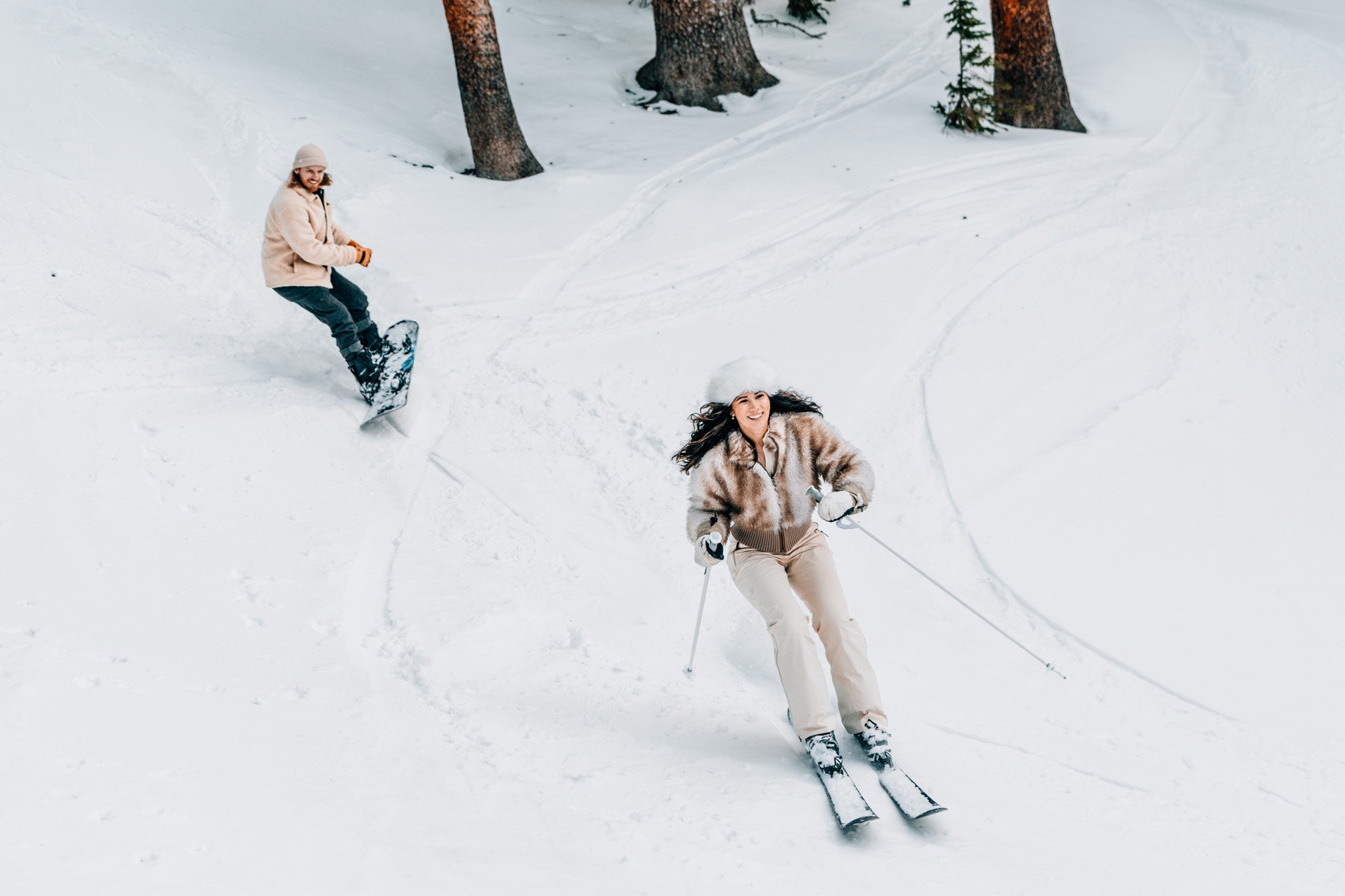
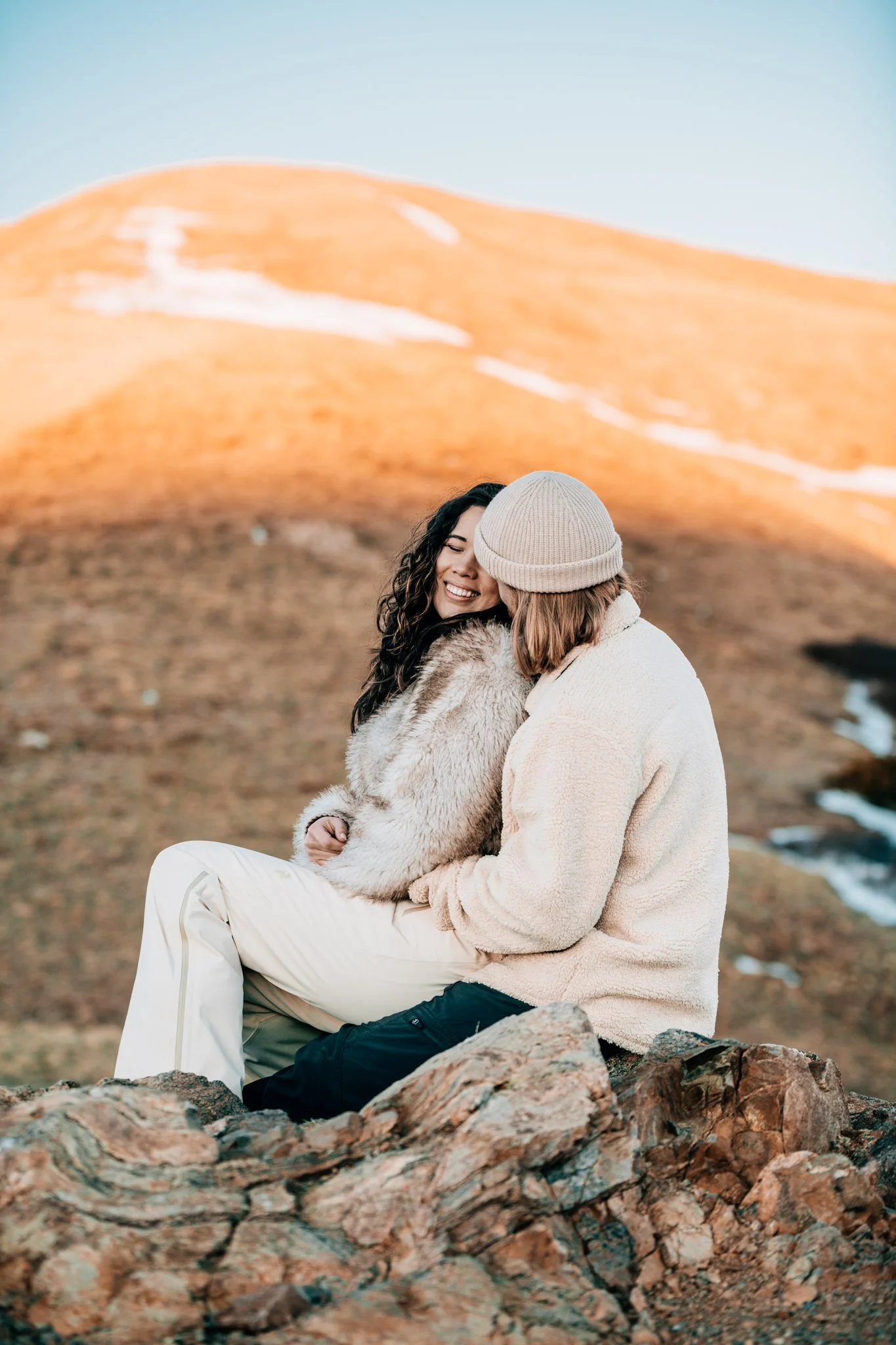
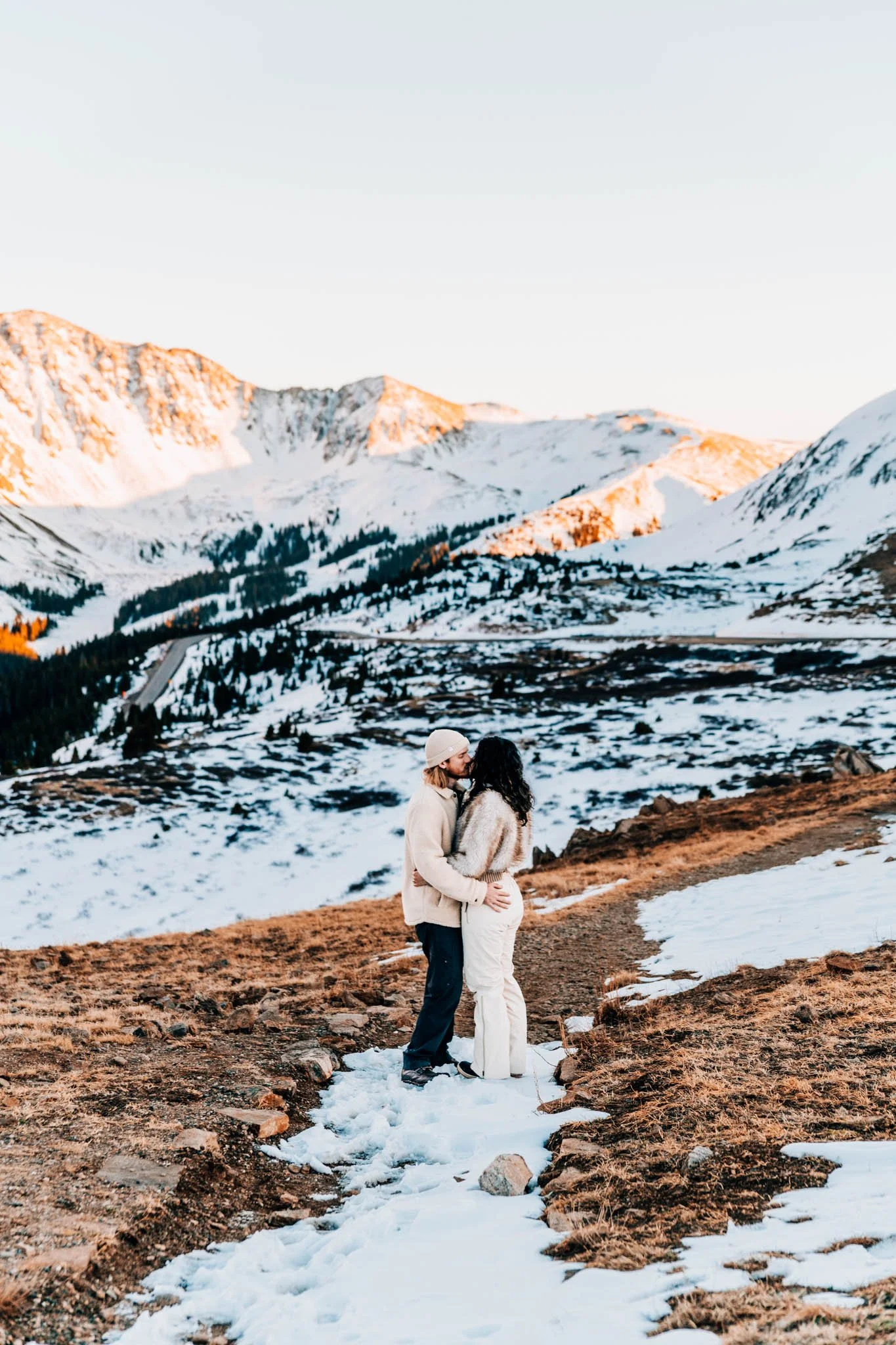
So when it came time to plan their Colorado backcountry ski engagement session, there was never really a question. They wanted something that actually felt like them: skis on, a little wind in our faces, and a golden hour view from the top of a pass.
If you’re dreaming about Colorado ski engagement photos that feel like an actual adventure (not just a backdrop), this is exactly what that can look like.
How to Plan a Colorado Backcountry Ski Engagement Session
Step One: Research (Safety + Scenery)
Planning a backcountry ski engagement session in Colorado isn’t something you wing.
We needed:
A low-angle route with minimal avalanche exposure
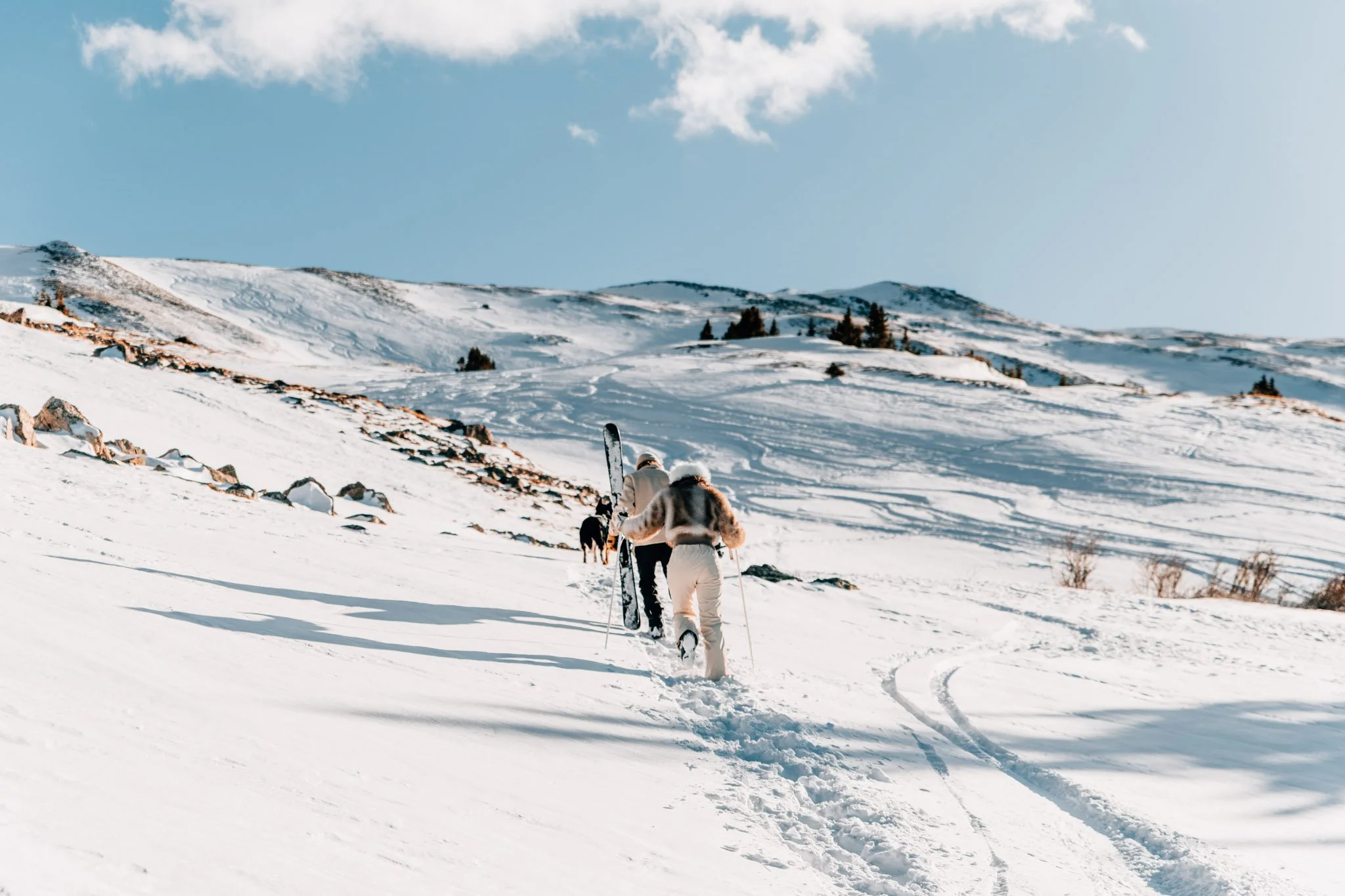
Easy access for a Colorado adventure engagement session - we wanted to achieve it all in an hour so we could take full advantage of golden hour!
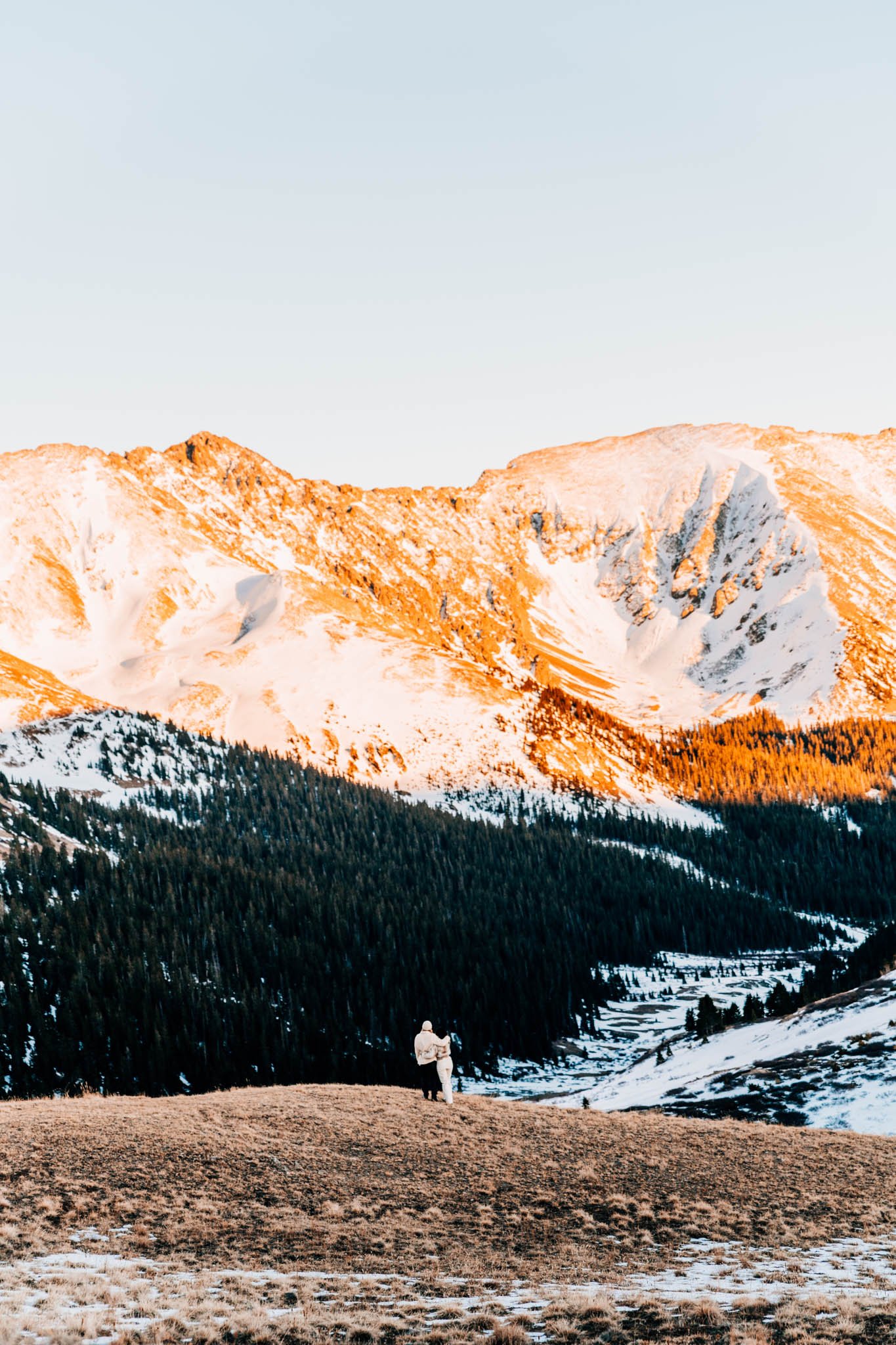
Expansive mountain views
And solid spring skiing conditions
We landed on Loveland Pass—one of the most iconic locations for Loveland Pass engagement photos and backcountry skiing in Colorado.
It’s also one of the few places where you can sometimes car drop a route, making it more accessible for engagement sessions compared to full touring days.
Step Two: Choosing the Right Route
For any Colorado ski engagement session, the route matters just as much as the photos.
While I help guide logistics as a Colorado adventure engagement photographer, I always want couples to feel confident in the terrain they’re skiing.
Because the reality is:
I’m moving slower with camera gear
Conditions can change quickly
And safety always comes first
We did a test run beforehand so that on session day, everything felt smooth and intentional.
Step Three: 24-Hour Weather + Conditions Check
Every successful Colorado backcountry engagement session comes down to timing.
The day before, we:
Confirmed the plan
Reviewed timeline + sunset light
Checked weather, wind, and snow conditions
Spring in the Colorado mountains—especially at Loveland Pass—is unpredictable, so flexibility is key when planning Colorado adventure engagement photos.
Step Four: The Session Day Experience
This is what makes a backcountry ski engagement session so worth it.
We lucked out with:
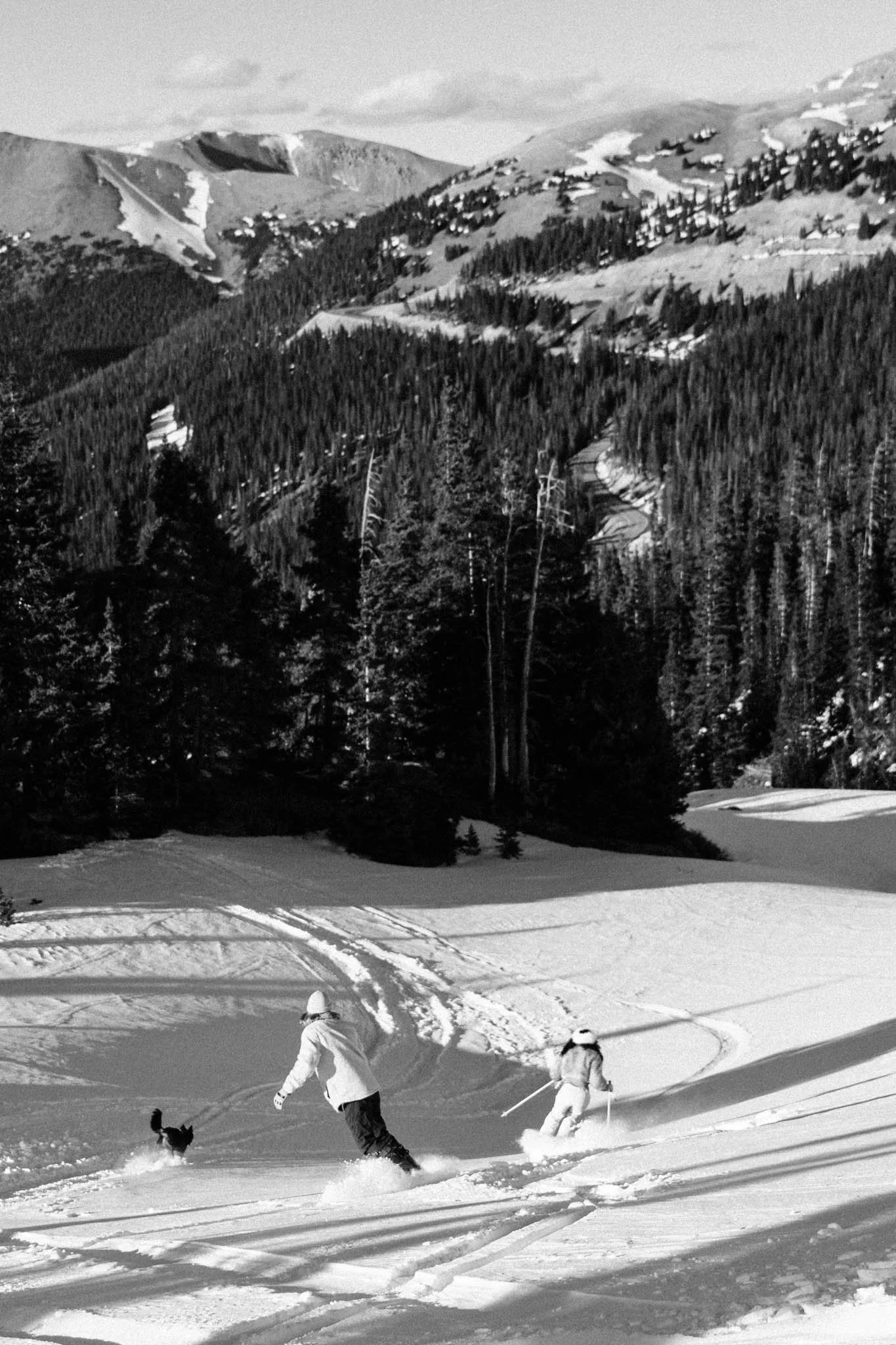
Fresh spring powder
Clear skies
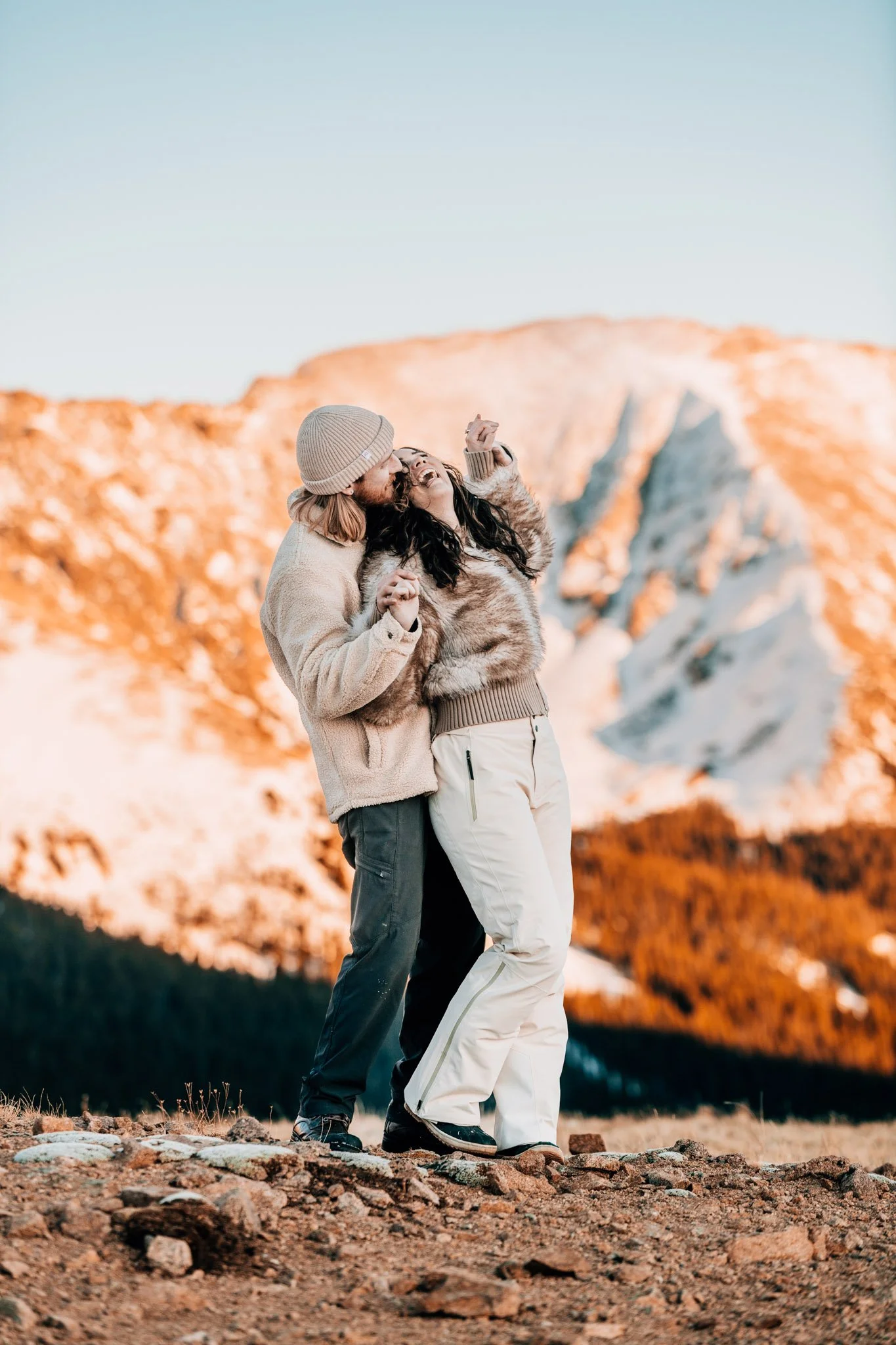
Soft, glowing sunset light
Our biggest concern was icy terrain (common for spring skiing in Colorado), but it only showed up briefly.
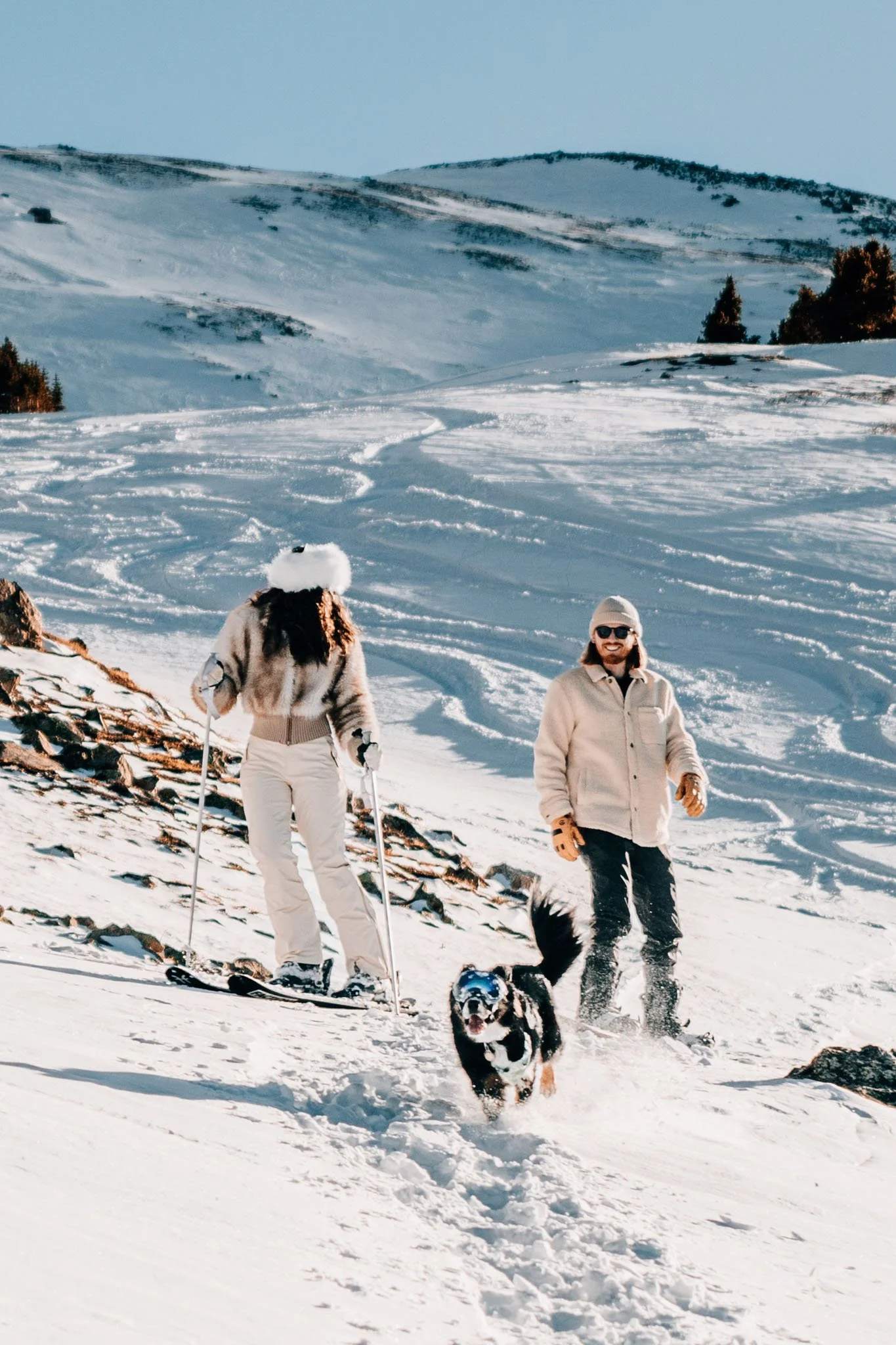
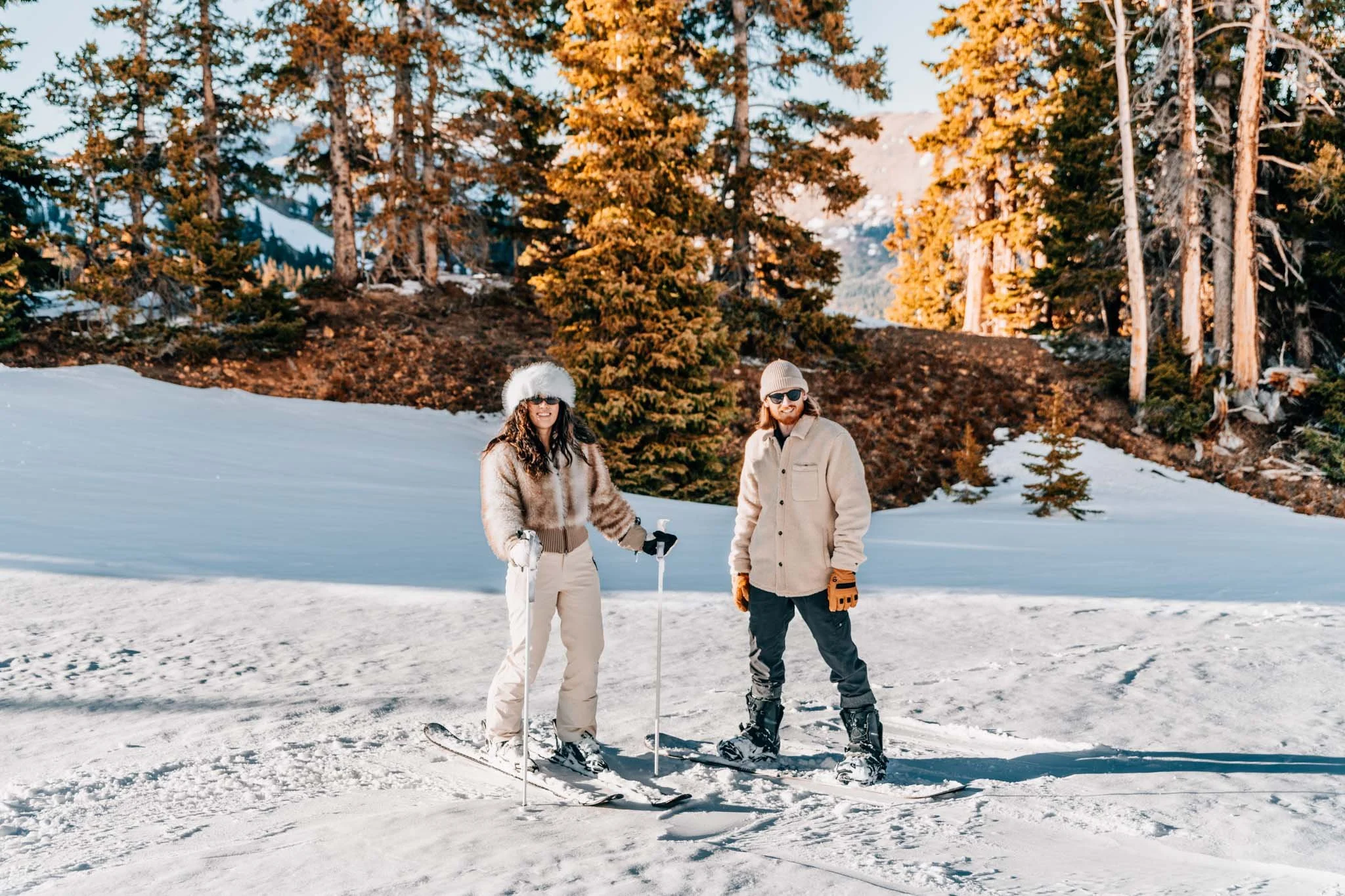
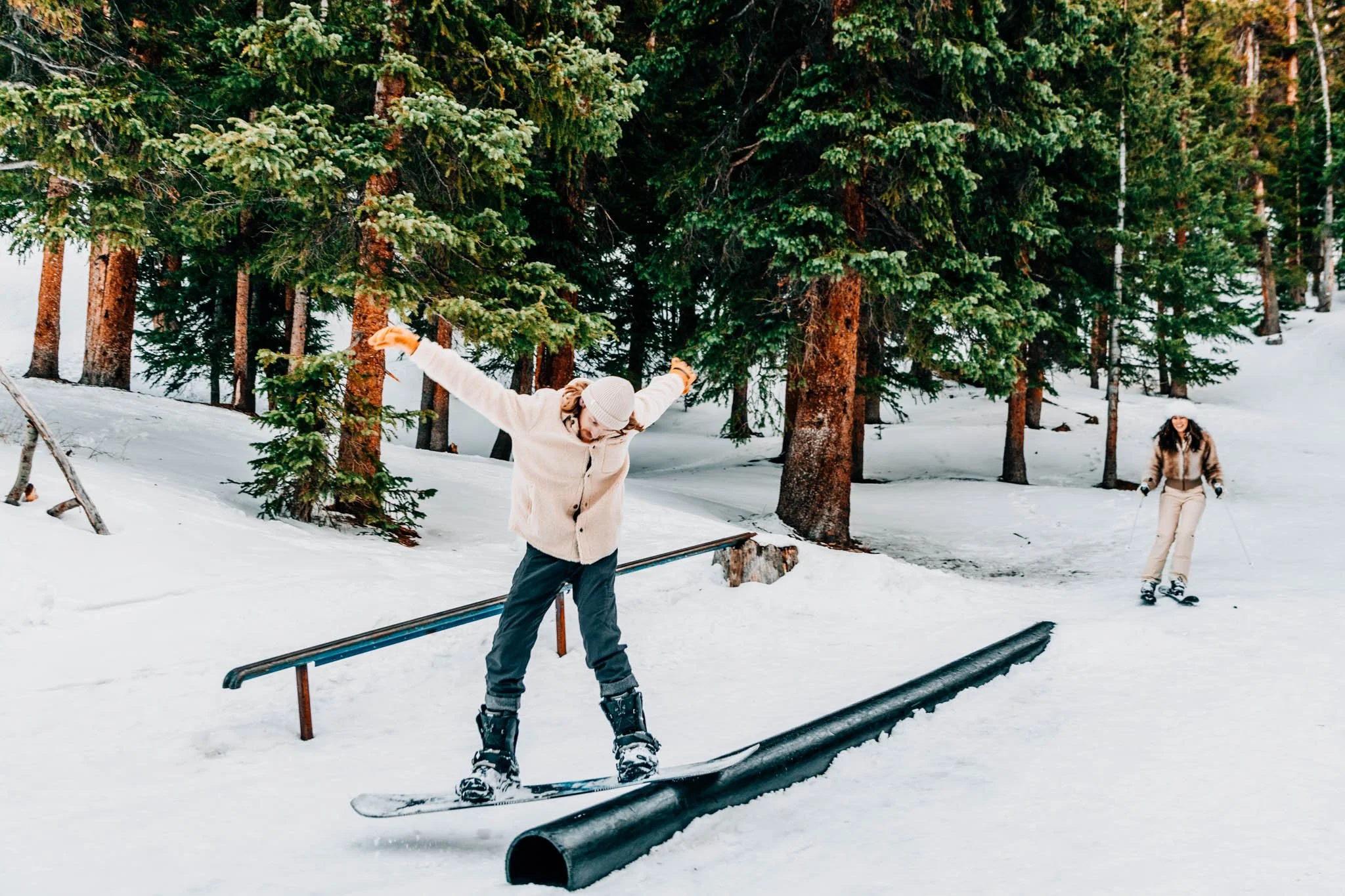
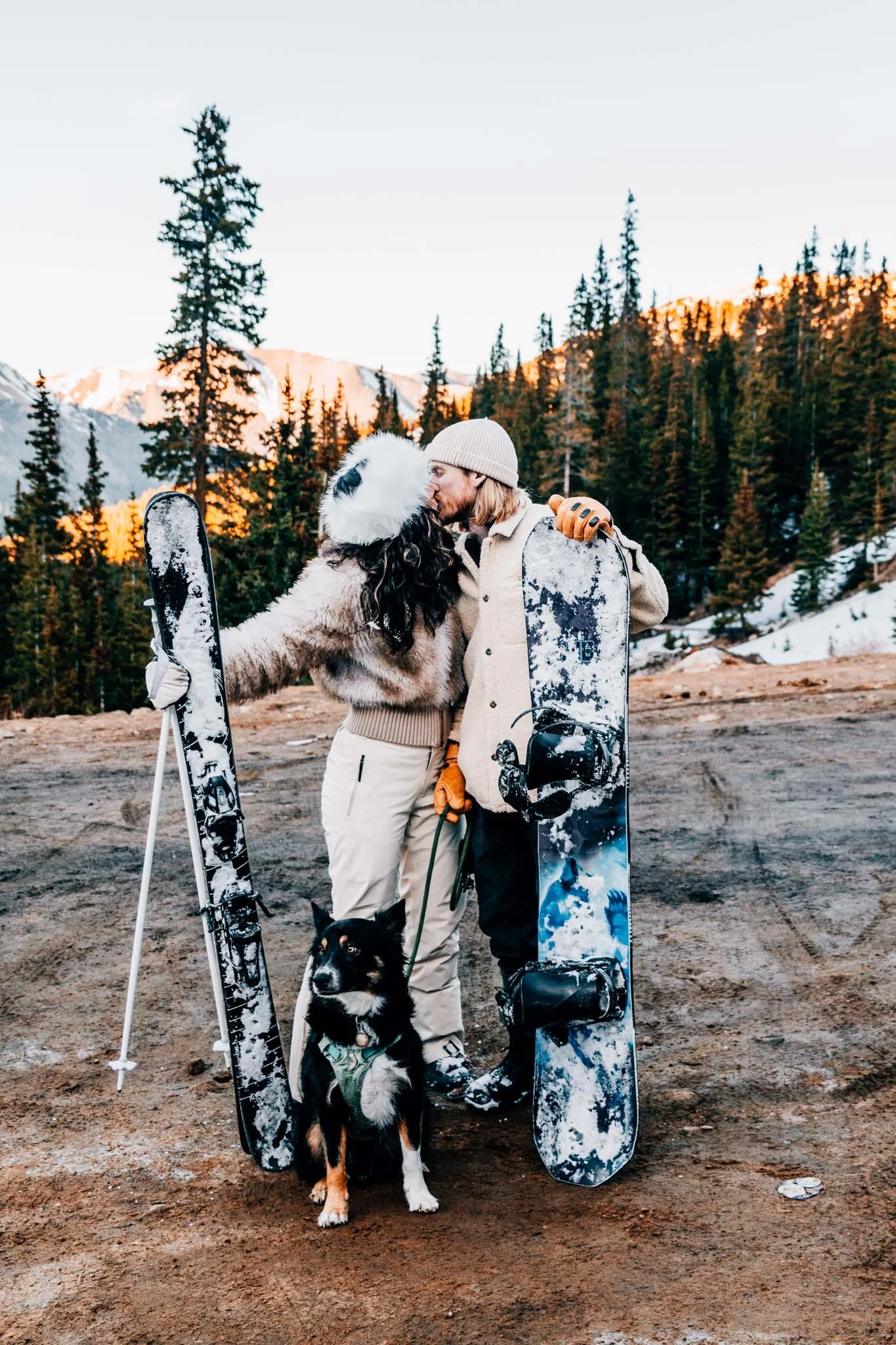
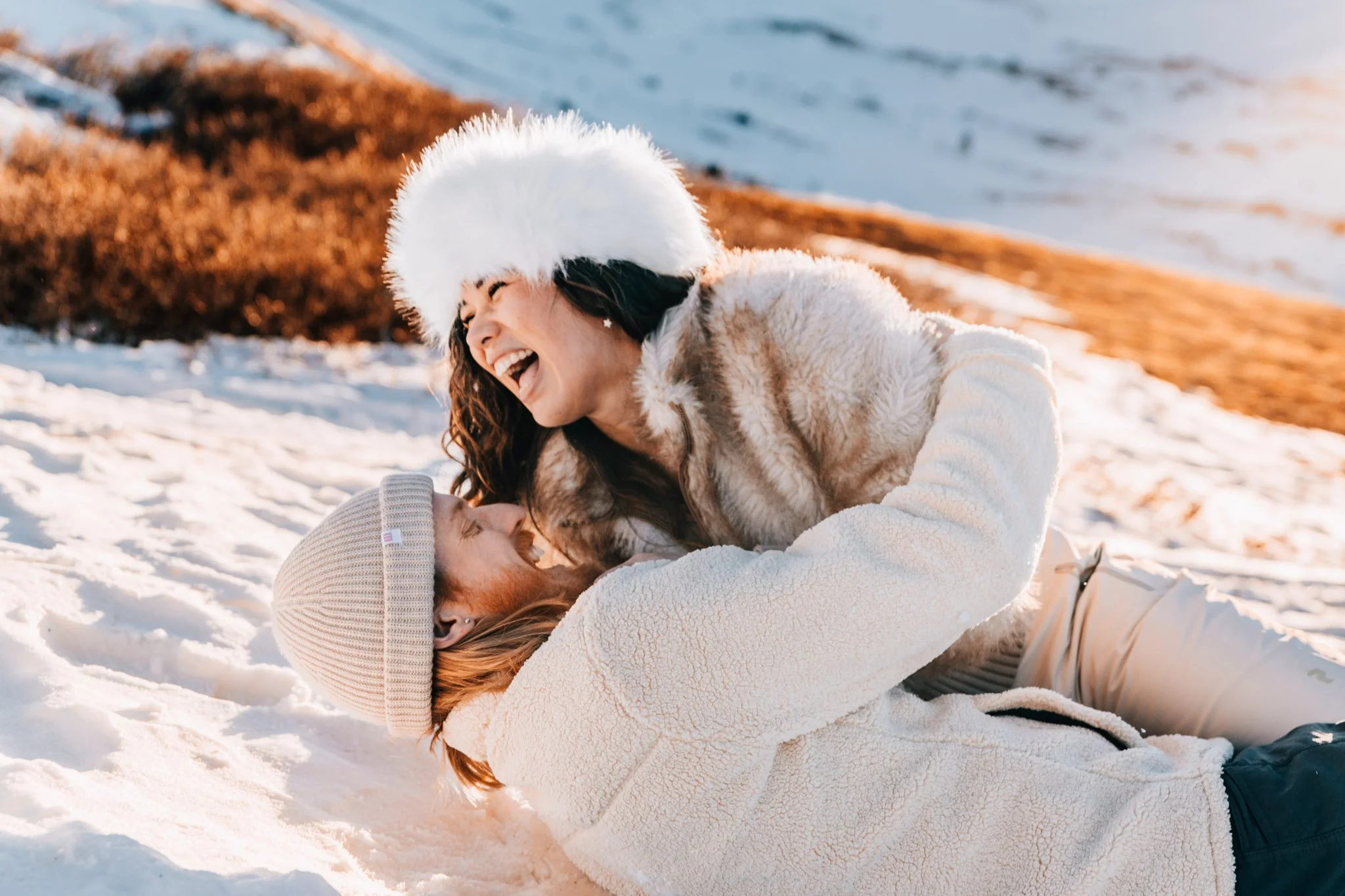
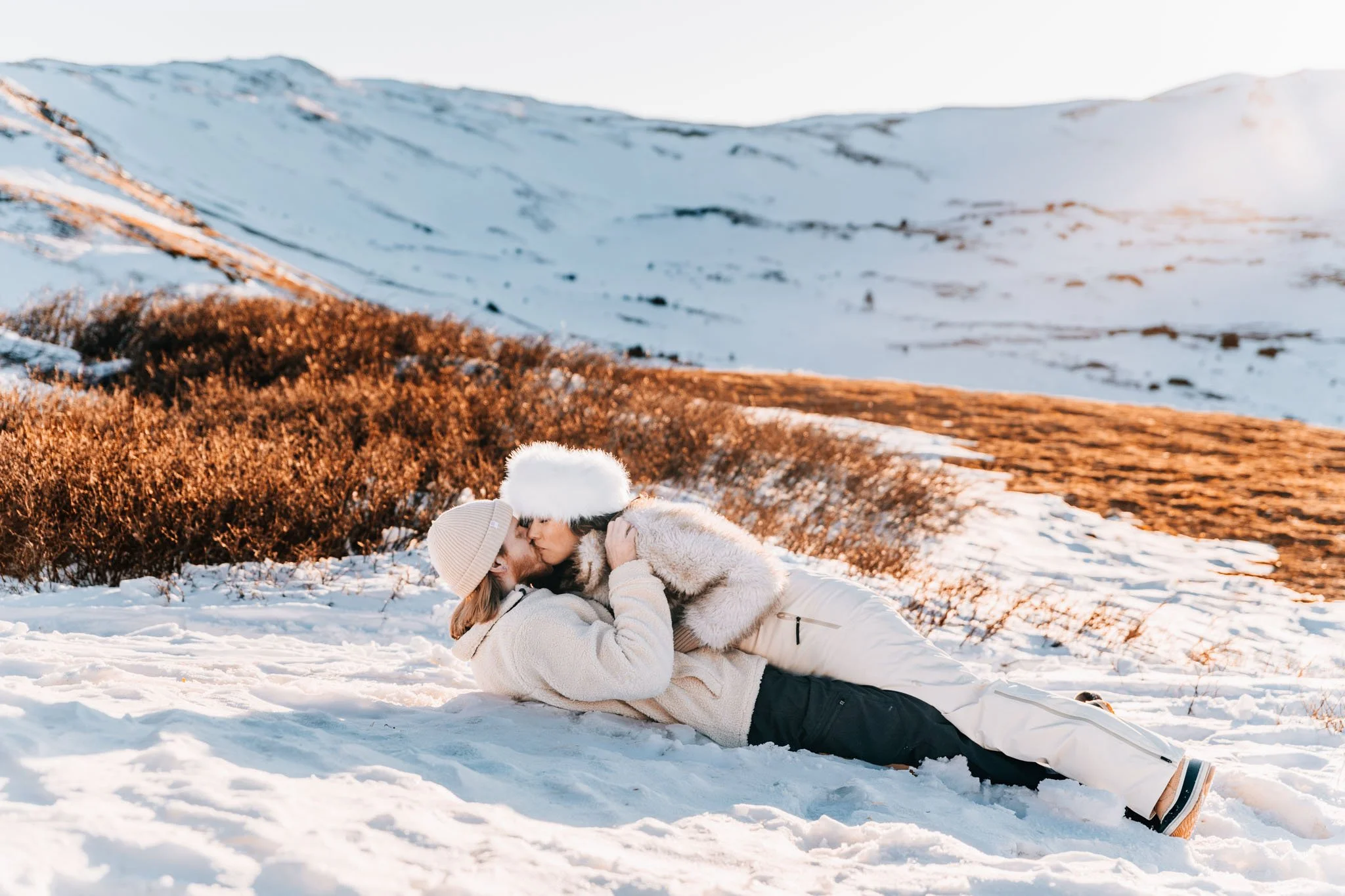
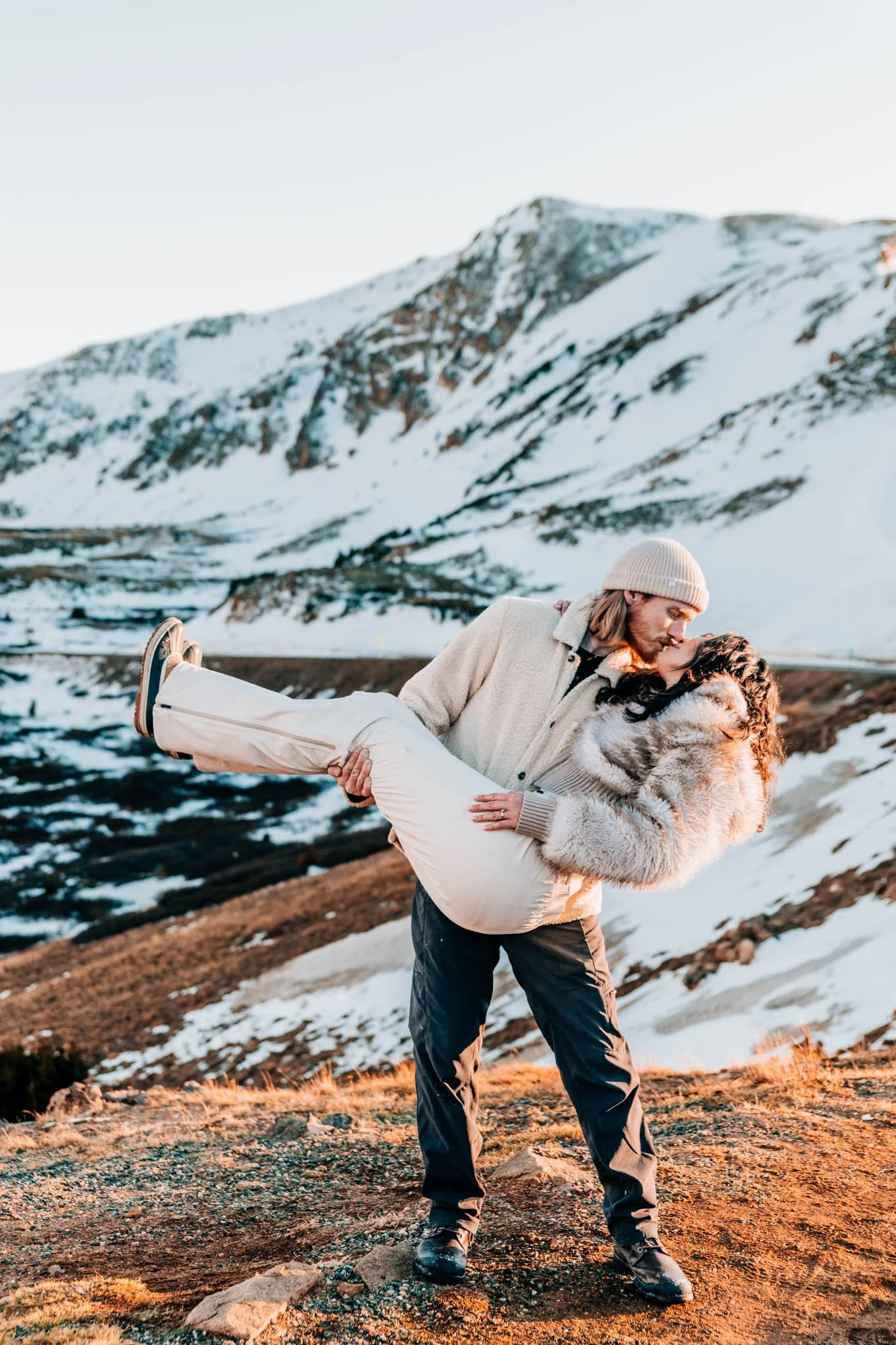
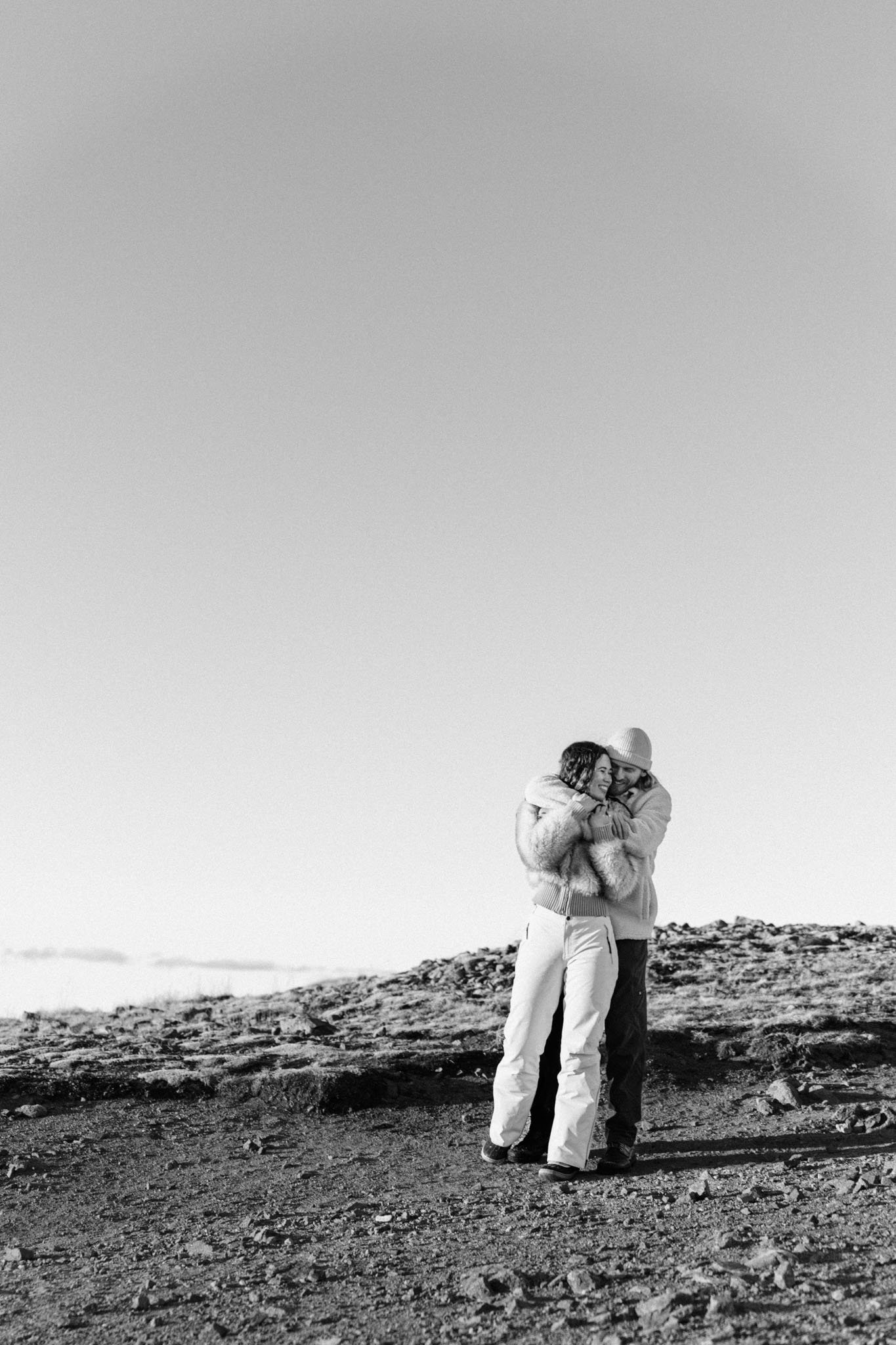
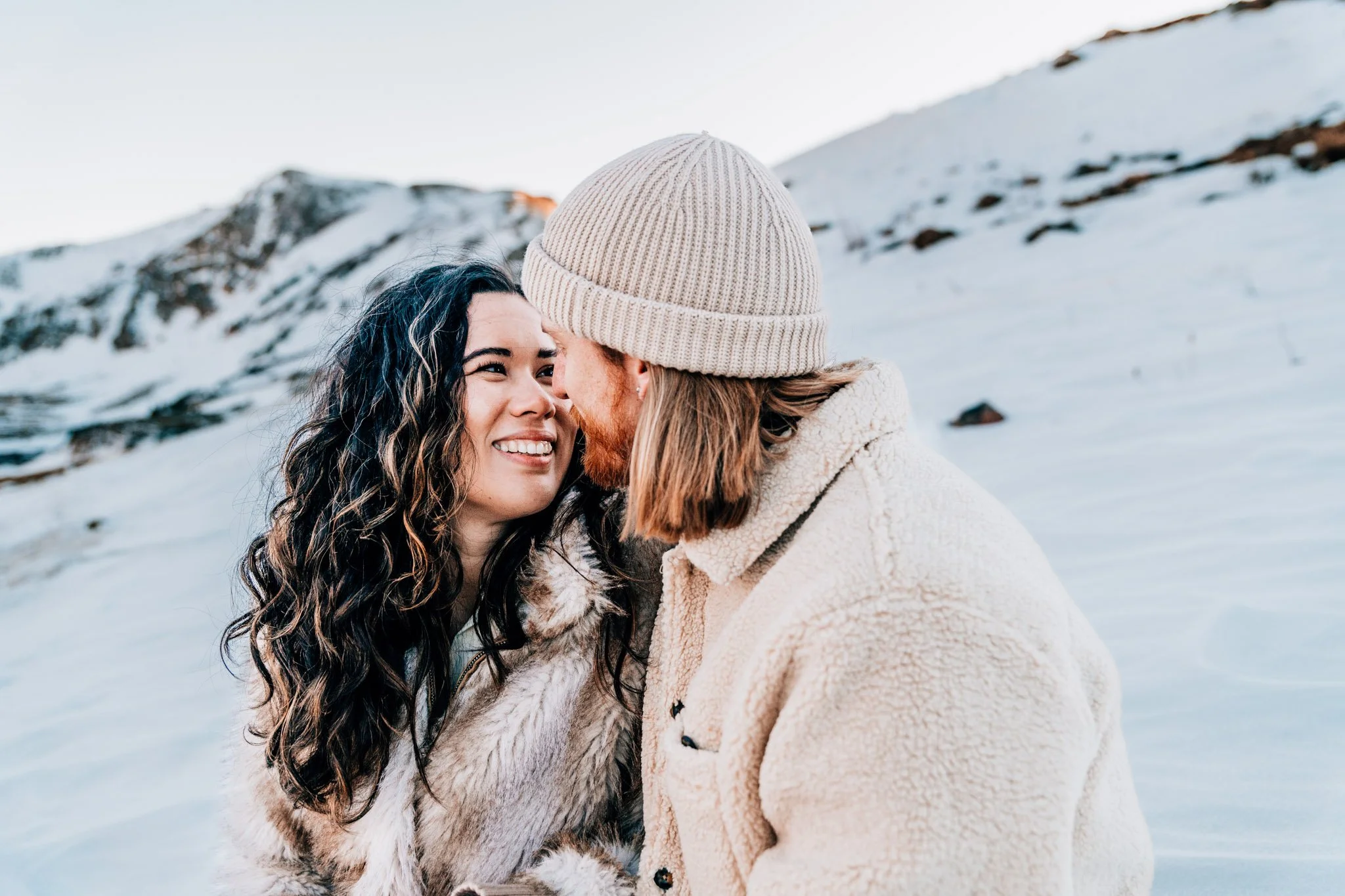
After skiing, we transitioned into more relaxed portraits—one of my favorite parts of any Colorado engagement session in the mountains.
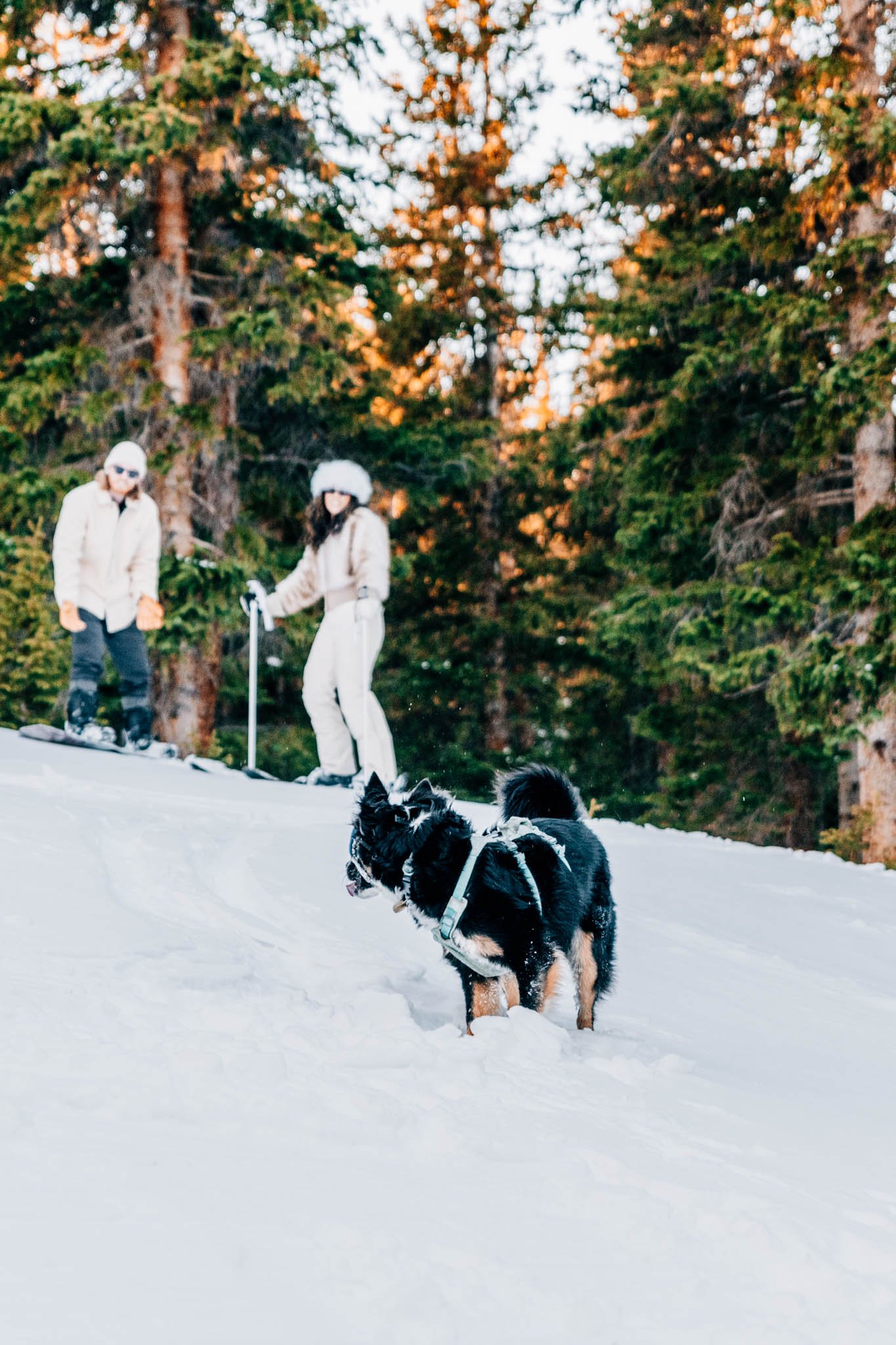
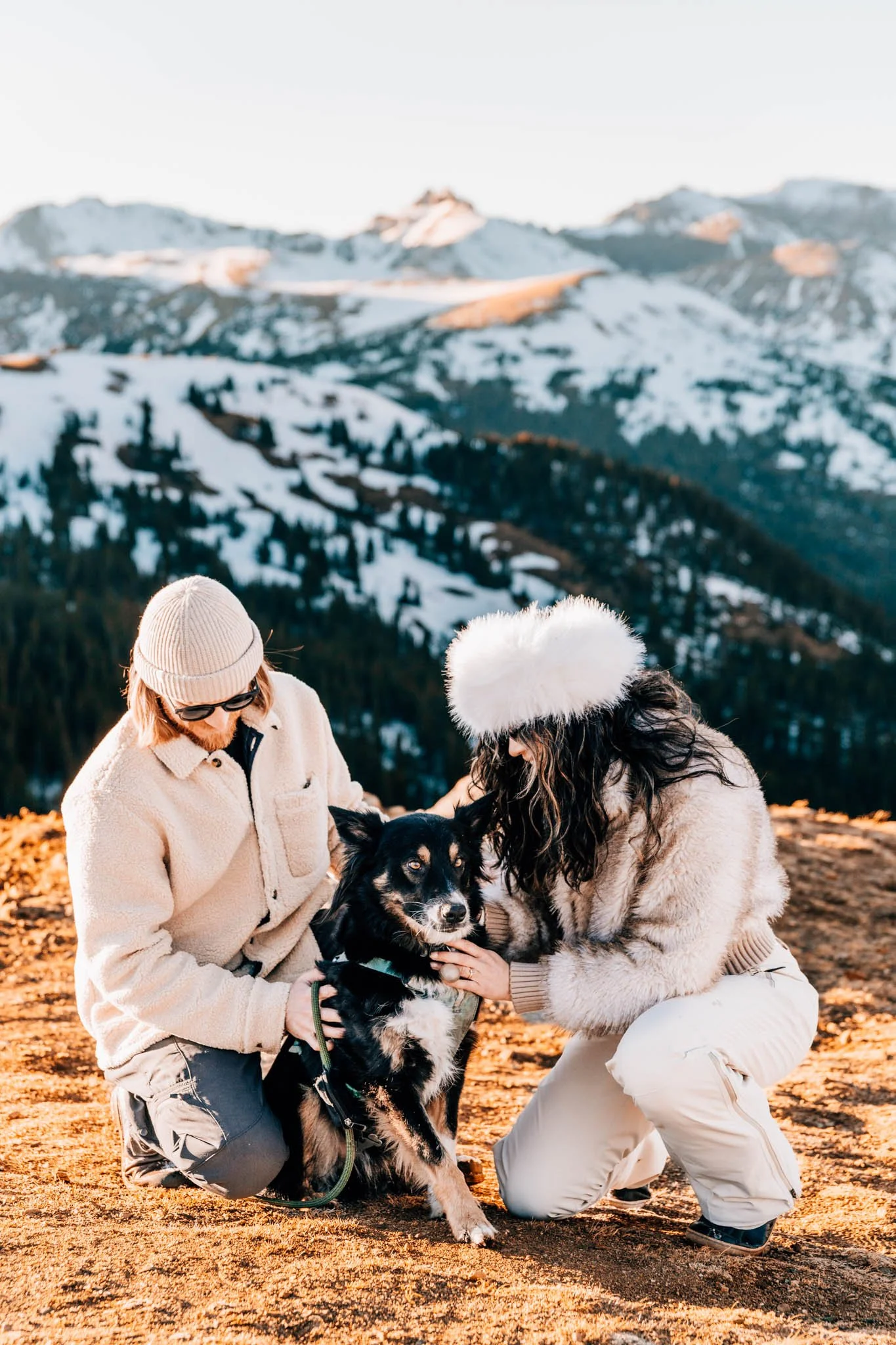
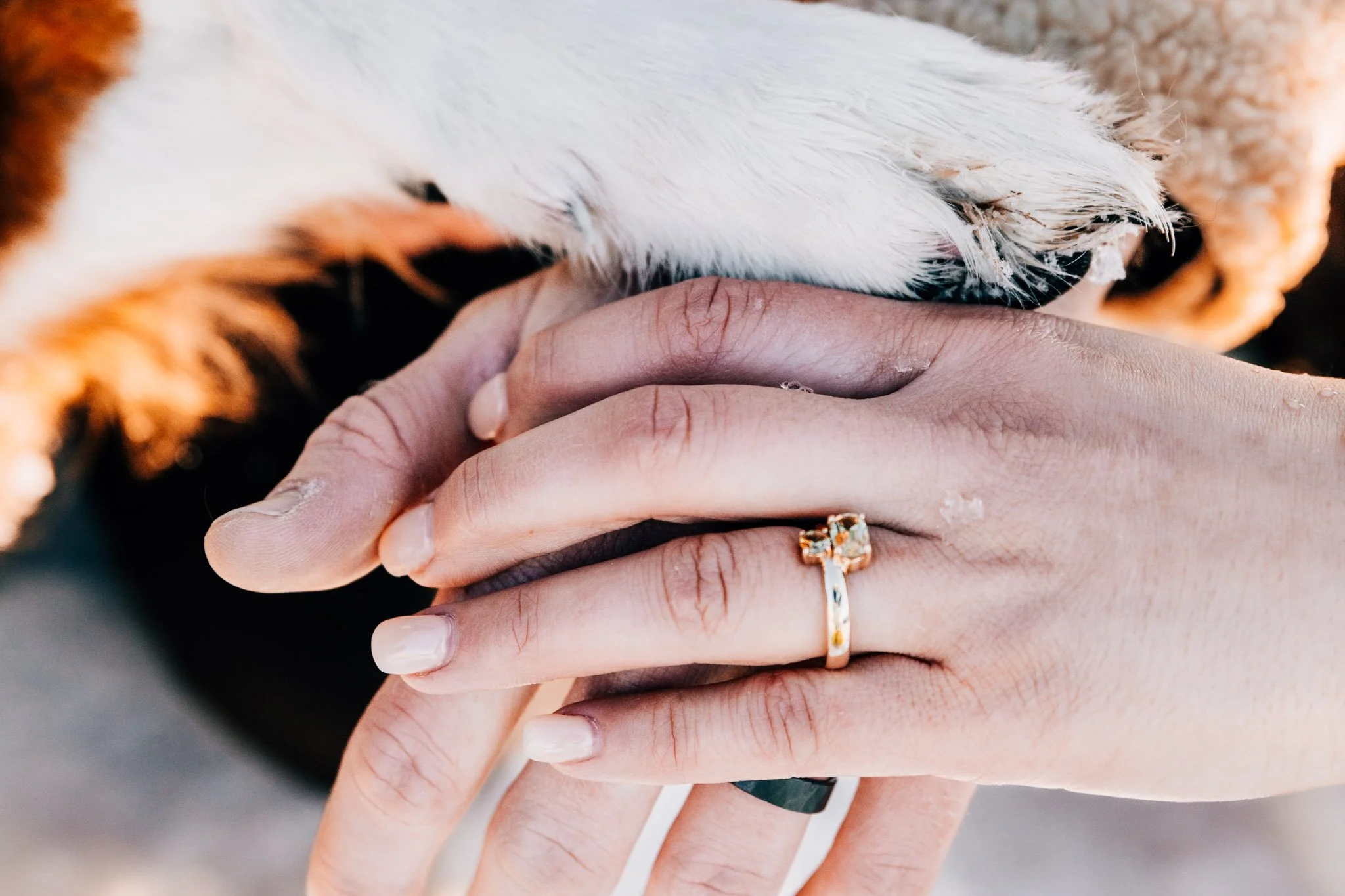
And yes, they brought their dog… which honestly made these some of my favorite Colorado ski engagement photos to date.
What Gear Do You Need for a Colorado Backcountry Ski Engagement Session?
A session like this is part photoshoot, part alpine mission.
Here’s what actually matters:
1. Avalanche Safety Gear (Non-Negotiable)
Even on mellow terrain, Colorado snowpack deserves respect.
At minimum:
Beacon
Probe
Shovel
If you’re not trained or comfortable using them, that’s your sign to pivot the plan—not ignore the risk.
2. Ski Touring Setup (Usually)
Most backcountry sessions require:
Touring skis + bindings
Skins
Touring boots
Kristi and Wyatt got lucky with a no-skin route—but that’s the exception, not the rule. Bonus points for walkie talkies to communicate!
3. Layers for Changing Conditions
Spring evenings get cold fast, especially once you stop moving.
Think:
Base layers
Insulation
Shell
Extra gloves
4. The Ten Essentials
This isn’t just a photoshoot—you’re still in the mountains.
Bring:
Water + snacks
Headlamp
First aid
Sun protection
5. Engagement Session Details
This is where personality comes in.
A few ideas:
Florals or a small bouquet
Statement jacket or layered outfit
Champagne (securely packed—trust me)
A Quick Reality Check
Backcountry ski engagement sessions are unforgettable—but they’re not casual.
Avalanche risk is real
Weather can change everything
You need to be confident skiing downhill with a pack
Even experienced skiers rely on:
Colorado Avalanche Information Center forecasts
Conservative terrain choices
Clear turnaround times
If you’re newer to backcountry travel, there is zero shame in keeping it simple. In fact, one of my favorite alternatives is uphill skiing at a resort—same vibe, way less risk, and still incredibly beautiful.
In search of a photographer to capture your skiing adventures? I’m here for it! Click below to inquire and learn more.